The fastest way to overspend on a trade show shipping kit is to compare products or vendors before defining the job. Premium does not have to mean complicated. In practice, the strongest plans often have fewer moving pieces, a clearer owner, and a deliberate fallback. Here is how to build one.
This guide is for small exhibit teams sending booth materials without a dedicated logistics department. By the end, you will have a packing map that works on setup day and on the return trip. Use the ideas as a planning framework rather than a universal ‘best’ list: confirm current specifications and policies with the provider you choose, then adapt the details to your own space, team, timeline, and budget.
Use a scorecard, not a vibe
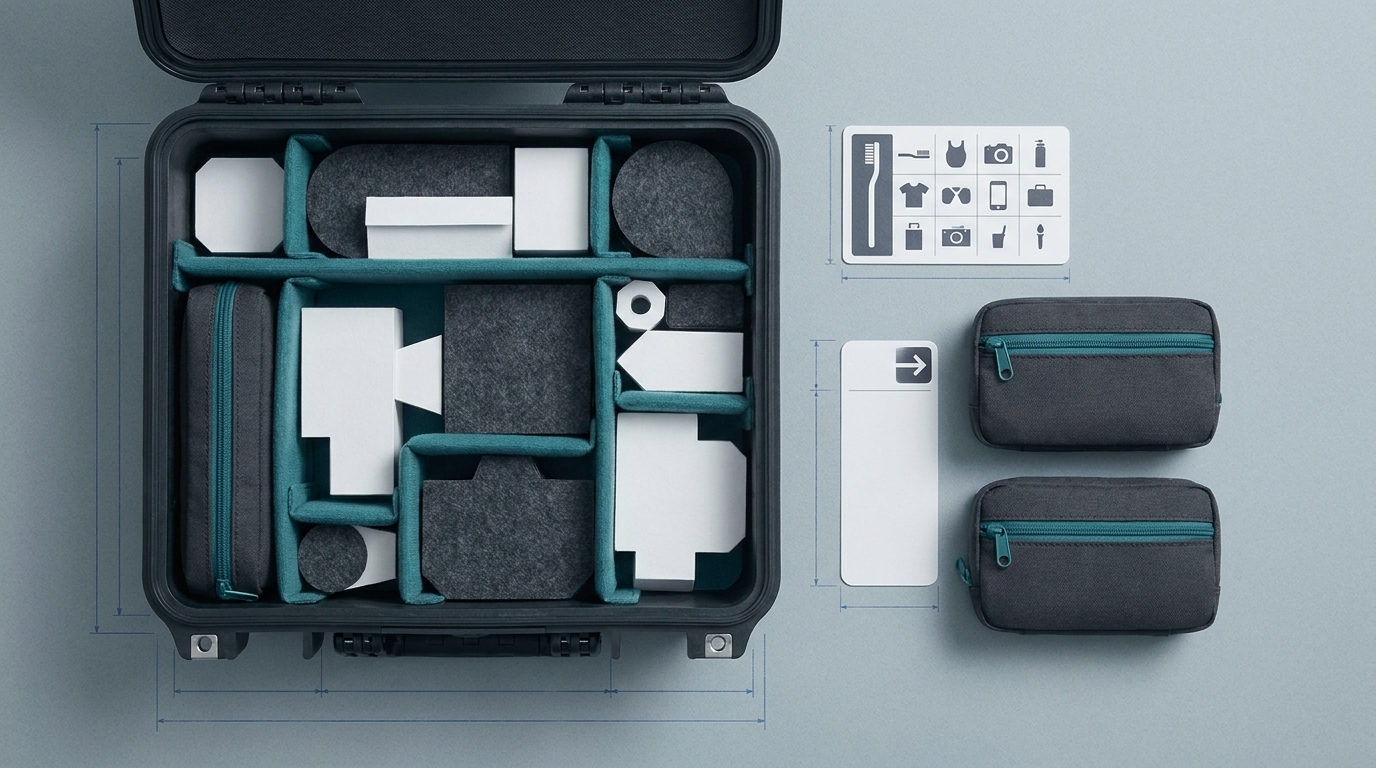
Pack by setup zone and moment of use, not only by object type. Put destination and return information inside and outside each case, keep a photo inventory, and carry a small duplicate essentials kit separately.
That short answer is useful because it creates a boundary. The common mistake is packing by item type without considering when and where each item will be needed. A boundary gives every later option a job: it either supports faster setup and fewer preventable show-floor scrambles or it does not. This does not remove taste or judgment. It simply prevents a loud detail from outranking the experience you are trying to create.
Set the scoring rules
- Primary user: Name the person whose experience matters most.
- Success signal: Describe the visible result in plain language.
- Hard limit: Record the budget, space, time, or capacity boundary.
- Owner: Give one person authority for the next decision.
Read the brief aloud as if you were handing it to someone who missed every earlier conversation. If that person could make a sensible next move, the brief is doing its job. If not, the missing piece is usually an owner, a limit, or a definition of success. For a multi-box shipment arriving at a convention center or advance warehouse, those three details matter more than adding another inspiration link.
The five-part score
1. Start with the material-handling guide
Start with the material-handling guide. Keep the first version deliberately plain. Once the basic flow works, style and optional features can be added without hiding a weak decision underneath decoration. A five-minute review here can prevent an hour of cleanup later.
2. Map setup zones
Map setup zones. Look for the exception that is likely to occur, not every exception imaginable. A simple fallback for the most common snag protects the plan without turning it into a manual nobody reads. The goal is a repeatable result, not a perfect-looking planning document.
3. Create a case-level inventory
Create a case-level inventory. Write down what ‘done’ means. That small act prevents two people from carrying different pictures of the result and discovering the mismatch when changes are expensive. For small exhibit teams sending booth materials without a dedicated logistics department, that usually means choosing clarity over novelty.
4. Label every side that may face out
Label every side that may face out. Start by naming the decision this element should support. A useful choice removes friction for the people doing the work; an impressive-looking choice that creates extra handoffs is usually a poor bargain. This keeps the recommendation aligned with planning exhibit programs that are clear to visitors and manageable for the team delivering them.
5. Separate carry-on essentials
Separate carry-on essentials. Treat this as a working assumption, not a permanent rule. Put it into one real scenario, note where people hesitate, and adjust the smallest part that caused the hesitation. If the choice cannot be explained in one sentence, it probably needs another pass.
6. Pack the return journey
Pack the return journey. The practical test is whether a newcomer can understand what happens next without a private explanation. If the answer depends on tribal knowledge, add one label, owner, or checkpoint. A five-minute review here can prevent an hour of cleanup later.
7. Photograph the closed cases
Photograph the closed cases. Cost matters, but total effort is the better filter. Include setup time, coordination, storage, revisions, and the attention required on a busy day before calling an option economical. The goal is a repeatable result, not a perfect-looking planning document.
Open the first case in your head
The team reaches an empty booth space. Which case must open first, and does it contain the instructions and basic items needed before furniture or graphics block the floor? Now imagine teardown when everyone is tired. Can the same labels show what belongs together and where it returns? Packing should answer both moments, not merely fit everything into the smallest number of cases.
Tie-breakers
- All tools live in freight. Carry allowed setup essentials and documents separately.
- Labels show only the outbound address. Place return details inside each case.
- No one counts at teardown. Use the same inventory before cases close.
Notice that each correction is small. That is intentional. Plans become brittle when every concern produces another platform, prop, meeting, or rule. Fix the point of confusion first, observe the result, and only then decide whether more structure is justified.
What the scores actually mean
| Option | Best when | Watch for |
|---|---|---|
| Advance warehouse | You want an earlier delivery window | Deadlines and handling rules are strict |
| Direct-to-show | Production finishes late or guidance favors it | Receiving windows are narrow |
| Hand-carried essentials | Small critical items must stay with the team | Venue and travel restrictions still apply |
The table is a conversation tool, not a verdict machine. Weight the column that protects faster setup and fewer preventable show-floor scrambles most strongly. When two options remain close, choose the one that will be easier to explain, own, and revise. People tend to remember a smooth experience; they rarely remember how many features were available behind it.
Three useful conversations
- Ask the owner: “What decision do you need from me, and by when?”
- Ask the user: “Where would this feel confusing or slow in a real a multi-box shipment arriving at a convention center or advance warehouse?”
- Ask the vendor: “What is included, what is optional, and what changes after we approve?”
These questions are intentionally ordinary. Clear questions produce comparable answers, while broad requests for recommendations often produce polished sales language. Record the answers in the same place so the final decision can be traced without reconstructing a long email chain.
Frequently asked questions
How early should I decide on a trade show shipping kit?
Decide the requirements as soon as the real users, constraints, and owner are known. You do not need every detail at that point. Lock the outcome and the hard limits first, then preserve room to revise optional choices as current prices and availability become clear.
Is the premium option automatically the better choice?
No. A premium price can buy finish, support, capacity, or convenience, but only some of those may matter for faster setup and fewer preventable show-floor scrambles. Compare the complete experience and ongoing effort, not the label or the longest feature list.
What should I verify before committing?
Confirm the written scope, total price, dates, dimensions or capacity, revision rules, cancellation terms, support route, and every assumption that could change the result. Save the final version in a place the people responsible for delivery can access.
Make the call
A strong plan for a trade show shipping kit is not the one with the longest feature list. It is the one that makes the next decision obvious and keeps faster setup and fewer preventable show-floor scrambles visible when tradeoffs appear. Write the brief, walk through one realistic scenario, compare only the options that satisfy the brief, and name the owner of the next step. That is enough structure to move with confidence without pretending every detail can be predicted.
Before publishing or purchasing, verify current prices, dimensions, availability, contract terms, and product details with the relevant provider. Exhibit Booth Brief offers independent educational planning content and does not present sponsored placements as editorial recommendations.